Facial aging is often described as a loss of volume, though the more accurate description is a loss of structure. Beneath the skin sits a scaffold of collagen that holds the face in position, keeping the midface projected and the skin firm against the bone it covers. That scaffold begins to thin long before the change becomes visible in the mirror.
By the time hollows appear in the cheeks or the jawline starts to soften, the underlying collagen has usually been declining for years. Traditional fillers address the surface of this problem by adding volume to specific hollows. A collagen biostimulator works further down, prompting the body to rebuild the framework itself.
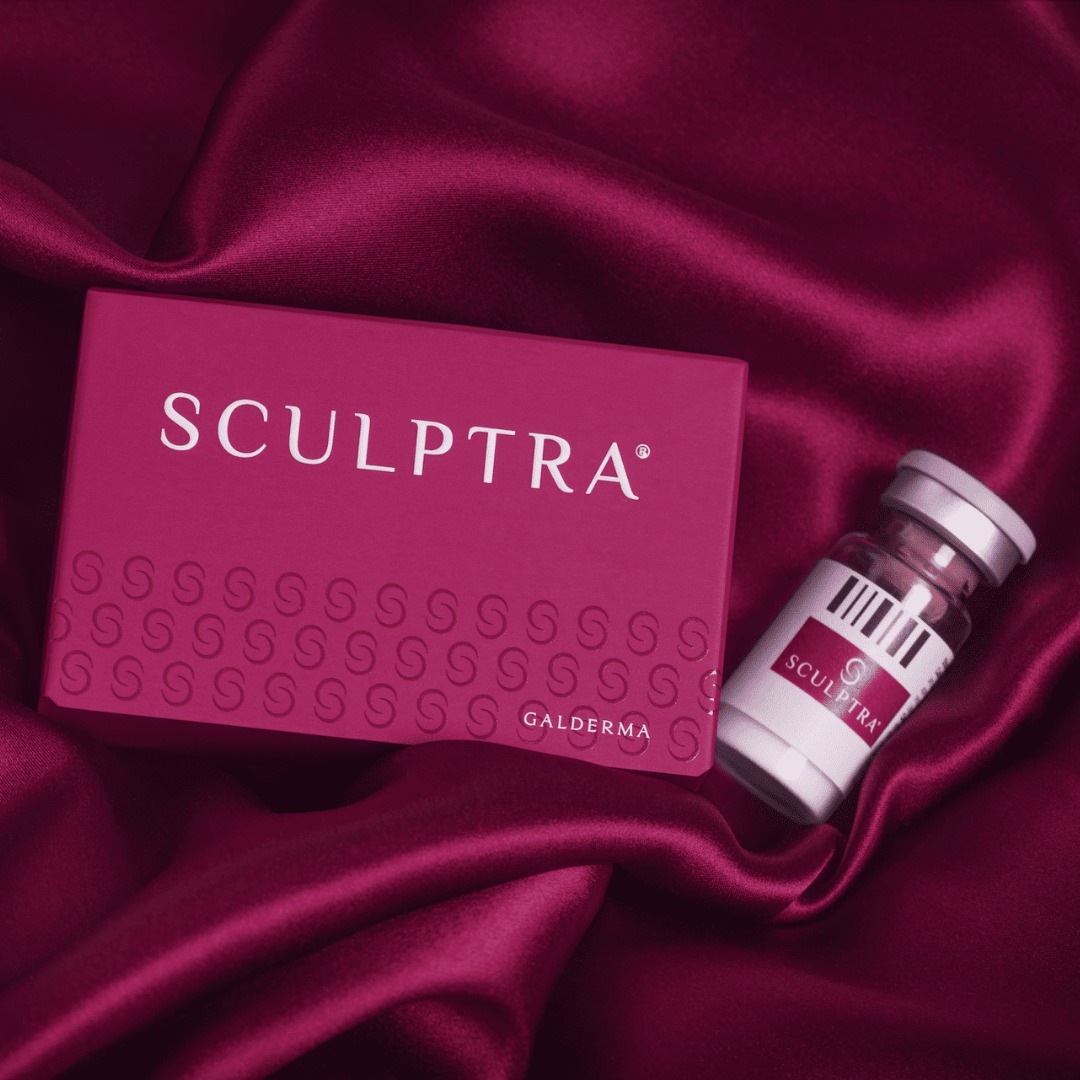
For patients who want to restore that framework across the whole face rather than treat one region at a time, Sculptra in Clarksville, TN offers a distinctive path. It rebuilds collagen gradually and comprehensively, which makes it well suited to a full-face approach that keeps the cheeks, jawline, and skin quality in balance.
What is Sculptra, and how does it restore collagen?
Sculptra is an injectable made from poly-L-lactic acid (PLLA), a biocompatible and biodegradable material that has been used in dissolvable sutures and other medical devices for decades. When it is injected into the deep dermis, the PLLA microparticles act as a collagen biostimulator. They prompt a controlled, low-grade response from the body that recruits fibroblasts to the treated area and stimulates them to lay down new collagen.
Over the weeks and months that follow, the PLLA gradually breaks down and is absorbed. In its place, a fresh network of your own collagen remains. The result comes from tissue the body has produced, so it integrates with the surrounding face and moves as your face naturally moves. This mechanism is the reason Sculptra results build slowly rather than appearing on the day of treatment. You can read more about how Sculptra differs from traditional dermal fillers for a fuller comparison of the two approaches.
What makes Sculptra a collagen restorer rather than a volumizer Traditional gel fillers occupy space beneath the skin and are visible from the moment they are placed. Sculptra works one layer deeper, rebuilding the collagen scaffold that supports the skin from within. The volume it creates is your own tissue, generated over months, which is why the improvement looks like healthier, firmer skin rather than added product. Once the PLLA has fully absorbed, the collagen it stimulated stays behind. |
Why does the whole face lose collagen as we age?
Collagen is the primary structural protein in the skin and the deeper facial tissues. It forms the meshwork that gives skin its firmness and holds the fat pads, muscle, and skin in their youthful positions. Collagen production declines steadily with age, and the loss is gradual enough that most people notice its consequences long before they recognize the cause.
The decline does not stay confined to one region. The cheeks lose the deep collagen and fat that once projected them forward, so the midface flattens and descends. The temples hollow. Along the jawline, weakening connective tissue lets skin and fat drift below the bony edge of the mandible, blurring a contour that was once sharp. Skin across the whole face thins and loses elasticity, which makes fine lines and crepiness more apparent. Because these changes share a single root cause, treating them at the level of collagen can address several of them at once.
This is what separates a full-face approach from spot treatment. Adding filler to the cheeks alone can leave the jawline and temples looking comparatively depleted, and the eye reads that imbalance even when it cannot name it. Restoring collagen across the connected regions of the face keeps its proportions intact.

How does Sculptra restore the cheeks and midface?
The midface is often where collagen loss first becomes visible. As the deep medial cheek fat and the collagen supporting it diminish, the cheeks lose projection and begin to sag downward. That descent is responsible for a cascade of secondary changes, including deeper nasolabial folds and new heaviness around the mouth.
Sculptra addresses the cheeks by rebuilding structural support where the face has lost it. Rather than pushing a single hollow forward with gel, it re-establishes a broad foundation of collagen beneath the cheek, which lifts the midface as a unit and softens the folds that formed when it descended. Because the new collagen is distributed through the tissue instead of concentrated in one pocket, the restored cheek moves naturally and avoids the overfilled look that can follow aggressive filler placement.
The evidence for Sculptra in the midface is substantial. In a 2025 multicenter randomized trial of 331 patients, poly-L-lactic acid produced a significantly higher rate of midfacial volume improvement than hyaluronic acid filler, with 90.57 percent of the PLLA group meeting the volume-improvement threshold compared with 51.01 percent of the filler group (PMC source). For patients weighing their cheek volume options, our overview of the area-specific benefits of dermal fillers explains where gel fillers still hold an advantage.
How does Sculptra redefine the jawline and lower face?
The lower face asks for a firmer kind of support than the cheeks. A defined jawline depends on dense connective tissue holding the skin taut against the mandible, and it is this dense scaffolding that collagen loss erodes early in the lower third. As the framework weakens, pre-jowl hollows form on either side of the chin and early jowling softens the clean line from ear to chin.
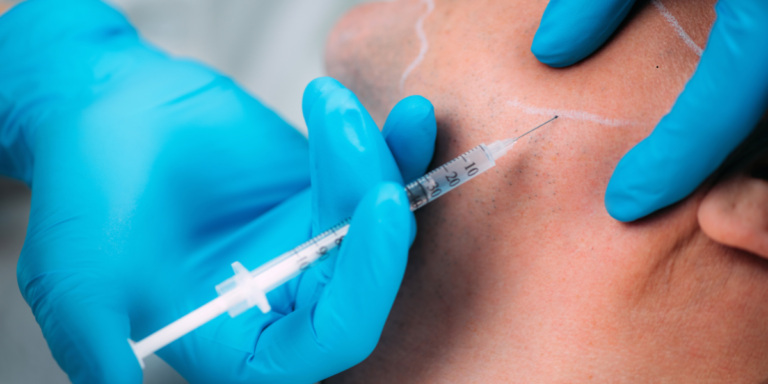
Sculptra is well matched to this region because it rebuilds the exact type of structural collagen the jawline relies on. Placed along the mandibular border, it strengthens the tissue above the developing jowl and fills the pre-jowl hollow with the patient’s own collagen, sharpening the transition between the face and neck. The improvement develops gradually, so the jawline appears to firm up over months with no sign of a procedure. Our dedicated guide to Sculptra for jawline definition covers the lower-face application in more detail.
What does full-face Sculptra rejuvenation look like?
A full-face plan treats the face as a connected structure rather than a set of isolated problems. Beyond the cheeks and jawline, Sculptra is frequently used in the temples, where hollowing creates a gaunt appearance and interrupts the smooth curve from the brow to the cheekbone. It also supports the lower face and improves overall skin quality, since the new collagen thickens the skin envelope wherever it forms.
That improvement in skin quality is one of the most valued outcomes of a panfacial approach. Patients often report that the treated skin feels firmer and looks smoother, with light reflecting more evenly across the face. Fine crepiness diminishes as the dermis thickens. Gel fillers do not offer this benefit, because they add volume without changing the quality of the skin above them.
How does Sculptra compare to traditional dermal fillers for full-face rejuvenation?
Both Sculptra and traditional gel fillers have a place in facial rejuvenation, and the strongest results often come from using them together. The distinction lies in what each one does and how the outcome develops over time.
Factor | Sculptra | Traditional dermal fillers |
|---|---|---|
Primary material | Poly-L-lactic acid (PLLA) | Hyaluronic acid gel in most products |
How it works | Stimulates the body to produce new collagen | Adds volume by occupying space beneath the skin |
Onset of results | Gradual, over roughly 6 to 12 weeks | Immediate, refines over 1 to 2 weeks |
Best-suited areas | Cheeks, temples, jawline, broad structural support | Lips, precise contours, defined angles |
Skin quality | Improves firmness and thickness through new collagen | Minimal direct effect on skin quality |
Duration | Up to 2 years or longer | Typically 6 to 18 months |
Sessions | Usually 2 to 3, spaced weeks apart | Often 1, with periodic touch-ups |
Reversibility | Naturally absorbed over time | Hyaluronic acid can be dissolved with hyaluronidase |
For most full-face plans, the two approaches are complementary. Sculptra rebuilds the broad collagen foundation, while dermal fillers in Clarksville, TN refine specific contours such as the lips or a precise jawline angle where immediate, defined shaping matters. Your provider will map out which tool suits each area during the consultation.
What does the Sculptra treatment experience involve?
A full-face Sculptra plan begins with a consultation in which the provider assesses the face at rest and in motion, mapping where collagen loss has affected structure and where stimulation will be most effective. This assessment guides how many vials are needed and how they will be distributed across the cheeks, jawline, temples, and any other treated regions.
During the appointment, a topical numbing agent is applied for comfort. The Sculptra is reconstituted according to precise protocols, then injected into the deep dermal and subcutaneous layers through a series of carefully mapped points. Your provider massages the treated areas afterward to distribute the product evenly, and will show you how to continue that massage at home over the following days. Most patients return to their routine the same day, with mild swelling or occasional bruising being the most common immediate effects.
Because Sculptra works gradually, a full-face result is usually built over a series of two to three sessions spaced several weeks apart. Each session adds to the collagen foundation laid by the last. You can review the full Sculptra results timeline to understand how the improvement unfolds between appointments.
When will you see full-face results, and how long do they last?
Sculptra rewards patience. In the first week or two after a session, any temporary fullness from the injection fluid subsides, and the face may look much as it did before treatment. This is expected. The meaningful change begins between weeks three and six, as fibroblasts respond to the PLLA and new collagen starts to form. By roughly six to twelve weeks, the added structure becomes visible in the midface and along the jawline.
The result continues to build with each subsequent session and typically reaches its peak several months after the final appointment. Because the improvement is made of your own collagen, it is durable. Most patients enjoy results that last up to two years or longer, and many schedule a single maintenance session periodically to sustain the foundation as natural collagen loss continues.
Combining Sculptra with other treatments for a complete result Sculptra restores the deep structure of the face, and it works well alongside treatments that address the skin above it. Microneedling in Clarksville, TN amplifies collagen formation by creating controlled micro-channels in the skin, which complements Sculptra’s deeper effect. For patients with skin laxity, Sofwave skin tightening in Clarksville, TN uses focused ultrasound to firm the skin envelope over the newly restored support. Where a single contour needs immediate definition, a small amount of dermal filler can refine it while Sculptra rebuilds the broader foundation. |
Who is a good candidate for full-face Sculptra?
Sculptra suits patients whose primary concern is diffuse volume loss and declining structure rather than a single, well-defined hollow that needs precise correction. Candidates who do well with a full-face approach often recognize the following in their own faces:
- Gradual flattening of the cheeks, softening of the jawline, or hollowing of the temples that has developed slowly over years rather than appearing suddenly.
- Thinning, less firm skin that no longer responds to topical products, paired with a preference for results that build naturally over months.
Patients in their late 30s and 40s frequently use Sculptra to slow and reverse early structural loss before it advances. Patients in their 50s and beyond use it to rebuild a foundation that has diminished more substantially. Those who prefer a gradual, natural progression over an immediate change tend to be the most satisfied, since the treatment is designed to work with the body’s own timeline.
Some situations call for a combined or alternative plan. Significant skin laxity or descent may be better addressed with skin-tightening technology or, in advanced cases, surgery. Very deep, isolated hollows sometimes benefit from a small amount of filler placed alongside Sculptra. Your provider will identify these distinctions during the assessment.
Is Sculptra safe? What should you know in advance?
Sculptra has a long safety record and has been approved for aesthetic use for two decades. The most common side effects are mild and short-lived, including swelling, redness, tenderness, or occasional bruising at the injection sites. These usually resolve within a few days.
Technique matters as much as the product. Even, well-distributed placement and diligent massage in the days after treatment reduce the small risk of nodules, which are firm collections that can form when the product settles unevenly. This is why full-face Sculptra should be performed by an experienced injector with a detailed understanding of facial anatomy. At Face Fabulous Med Spa, every treatment plan is built around conservative dosing and precise placement that prioritize a natural, balanced result.
Patients are generally advised to avoid blood-thinning medications and supplements for several days before treatment when medically appropriate, and to stay well hydrated. Your provider will review your medical history and any history of keloid scarring during the consultation, since these factors help determine whether Sculptra is the right choice for you.
Frequently asked questions about Sculptra for collagen restoration
How is Sculptra different from a regular filler?
Sculptra stimulates your body to produce its own collagen over time, while most traditional fillers add volume immediately by placing a gel beneath the skin. Sculptra rebuilds structure across broad areas, and gel fillers refine specific contours. Many full-face plans use both.
How many sessions will I need for a full-face result?
Most patients need two to three sessions spaced several weeks apart. The number depends on the degree of collagen loss and the areas being treated. Your provider will estimate this during the consultation.
When will I see results across my whole face?
Meaningful change usually begins between three and six weeks after a session and continues to build for several months. A full-face result develops progressively across the series of sessions rather than appearing all at once.
How long does Sculptra last?
Results typically last up to two years or longer, because the improvement is made of your own collagen. Many patients schedule a periodic maintenance session to sustain the foundation as natural aging continues.
Does Sculptra look natural?
Yes. Because the volume comes from collagen your body produces gradually, the change integrates with your natural tissue and moves as your face moves. There is no sudden shift in appearance that signals a treatment.
Can Sculptra be combined with other treatments?
Yes. Sculptra pairs well with microneedling, Sofwave skin tightening, and small amounts of dermal filler for precise contours. Your provider will recommend a sequence based on your goals.
A full-face result that still looks like you
The most convincing rejuvenation is the kind no one can identify. The cheeks look supported, the jawline reads as defined, and the skin appears firmer, yet nothing looks added or altered. That quality of result is what a collagen-based approach is built to deliver.
Sculptra achieves it by working with the body rather than around it. The collagen that restores the face is your own, formed gradually in the tissue you already have, and the material that stimulated it disappears entirely over time. What remains is a firmer, better-supported face that keeps its natural proportions.
At Face Fabulous Med Spa in Clarksville, Tennessee, every full-face Sculptra plan is guided by careful anatomical assessment and a conservative philosophy that values long-term structure over dramatic short-term change. If you are considering a natural approach to restoring collagen across your face, schedule a consultation and let our team design a plan around your goals.
References
- Zhang Y, Zhang X, Gao X, et al. Efficacy and Safety of Poly-L-Lactic Acid for Correction of Midfacial Volume Loss and Contour Defects: A Prospective, Multicenter, Randomized, Parallel-Controlled, Evaluator-Blinded, Superiority Trial. Journal of Cosmetic Dermatology. 2025. Available at: https://www.ncbi.nlm.nih.gov/pmc/articles/PMC12273185/
- Ryu HW, Kim SA, Lee S, et al. Poly-L-Lactic Acid Increases Collagen Gene Expression and Synthesis in Cultured Dermal Fibroblast (Hs68) Through the p38 MAPK Pathway. Journal of Cosmetic Dermatology. 2020. Available at: https://pmc.ncbi.nlm.nih.gov/articles/PMC7992693/
- Fabi S, Goldie K, et al. Investigating the Effect of Biomaterials Such as Poly-(l-Lactic Acid) Particles on Collagen Synthesis In Vitro: Method Is Matter. Journal of Functional Biomaterials. 2020;11(3):51. Available at: https://pmc.ncbi.nlm.nih.gov/articles/PMC7564527/