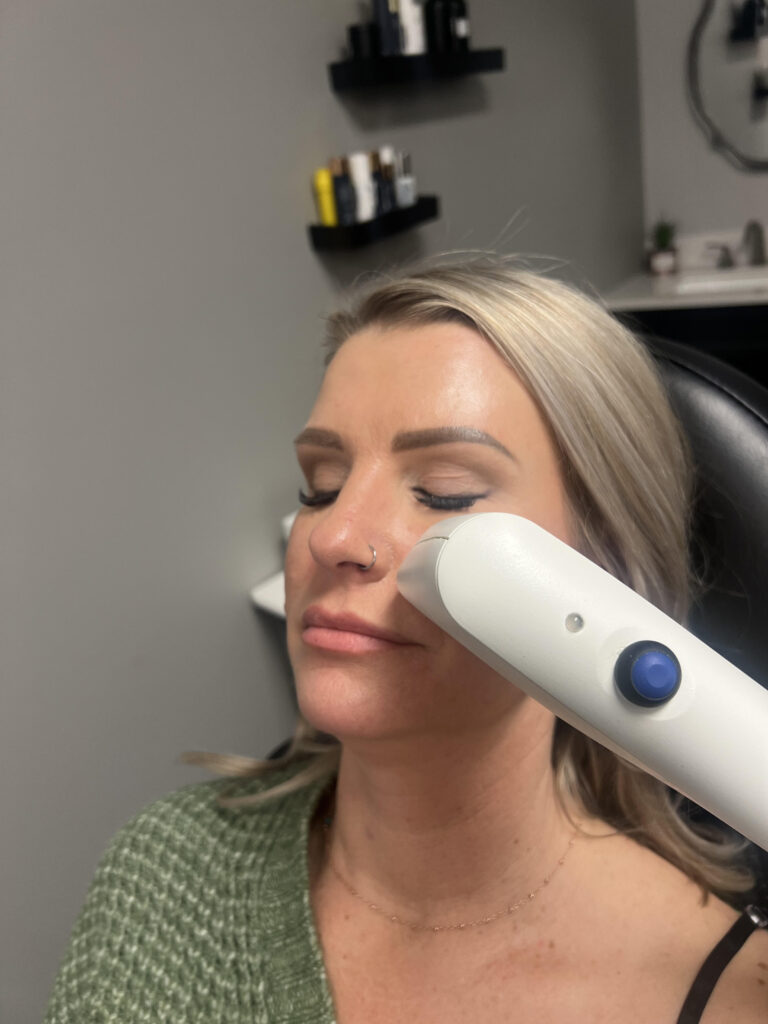
Most people who ask about Sofwave already know what is bothering them. The jawline photographs a little softer than it did five years ago, and the skin under the chin has started to fold whenever they look down at a phone. The real question they bring to the consultation room is whether a treatment with no incisions can change that, or whether they have reached the point where only surgery will help.
Sofwave is best suited to adults with mild to moderate skin laxity and fine lines whose skin still has a healthy capacity to build collagen. Patients with heavy jowls or loose folds of surplus skin along the neck usually get more from a surgical facelift or neck lift. At Sofwave skin tightening in Clarksville, TN, every treatment plan starts with an honest look at which of those groups you belong to, because the right answer depends on your anatomy far more than on the device.
What is Sofwave, and what does it treat?
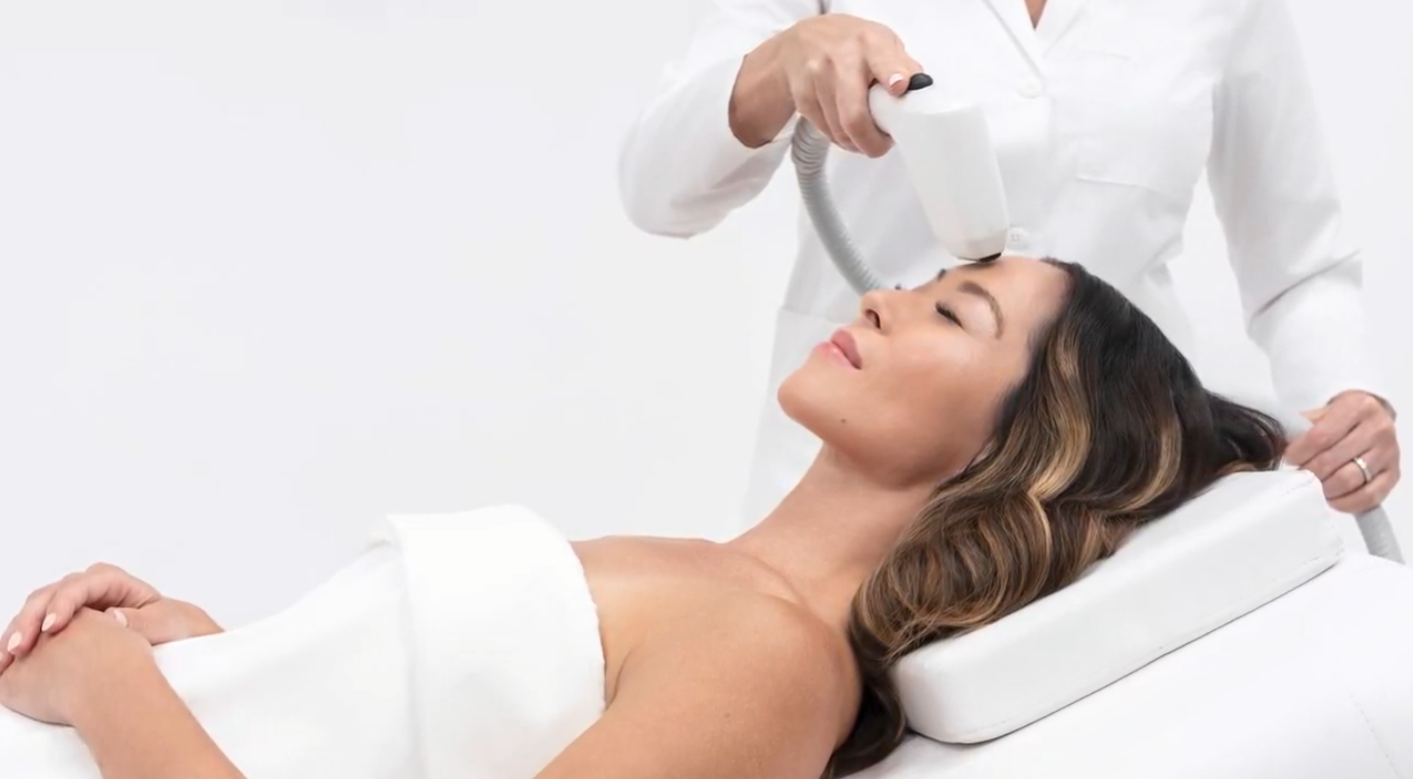
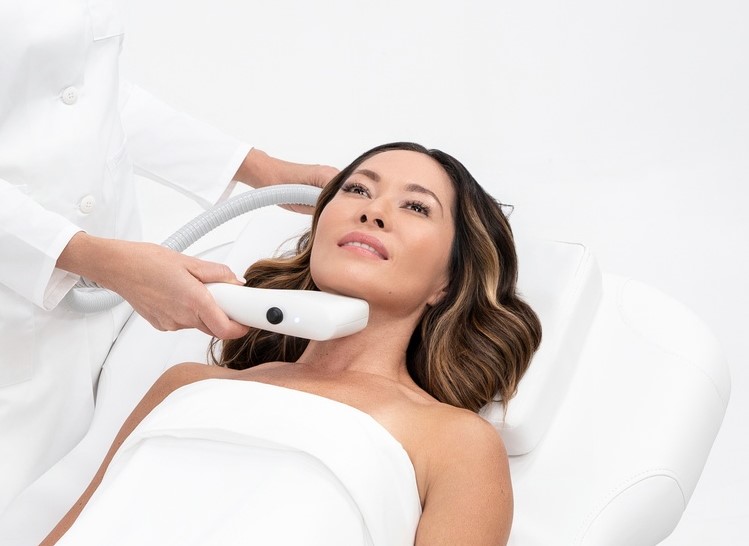
Sofwave is a non-invasive aesthetic device that uses Synchronous Ultrasound Parallel Beam technology, trademarked as SUPERB, to heat the mid-dermis at a depth of 1.5 millimeters. It is manufactured by Sofwave Medical and is cleared by the U.S. Food and Drug Administration to improve facial lines and wrinkles and to lift the eyebrow along with lax tissue under the chin and on the neck in adults aged 22 and older. An integrated cooling system called Sofcool protects the outer layer of skin while the energy is delivered.
The ultrasound energy creates small, controlled thermal zones in the dermis, the layer of skin where collagen and elastin fibers give the face its firmness. The body treats those zones as minor injuries and responds with fresh collagen and elastin over the following months. Sofwave therefore improves the quality and tension of the skin itself. The muscle layer beneath stays where it is, and no skin is removed.
That distinction sits at the center of every candidacy decision. A treatment that firms the skin envelope helps most when the skin envelope is the main problem. When the deeper structures of the face have descended, or when there is more skin than the face can support, firming the surface softens the picture without fully correcting it. Our overview of Sofwave as a non-surgical facelift covers the technology itself in more depth.
Who is an ideal candidate for Sofwave?
Strong candidates tend to share a recognizable profile. Their skin has begun to lose firmness, yet it still sits close to the underlying structure of the face. When they lift the skin along the jaw with light fingertip pressure in a mirror, the improvement they see is modest and believable. Their concerns fall at the early or moderate end of the scale, and they would rather see gradual improvement than a sudden change that friends and coworkers comment on.
In practical terms, that usually describes someone whose jawline has softened without forming a heavy jowl, or whose brows have dropped a few millimeters and make the upper eyelids look fuller. These patients tend to see a visible difference because the change they need is a matter of tightening, which is exactly what the treatment does well. Crepey texture and fine horizontal lines on the neck also respond well, and our article on Sofwave for neck and chest tightening looks at that area on its own.
Does age decide whether Sofwave will work?
Skin condition matters more than the number on your driver’s license. Many patients in their late 30s and 40s begin Sofwave when the first signs of laxity appear, with the aim of reinforcing collagen before sagging becomes established. Patients in their 50s and 60s can be excellent candidates as well when their skin has been well protected over the years and their laxity remains moderate. A 62-year-old with good skin quality may respond better than a 45-year-old with heavy sun damage and a long smoking history, because the result depends on the body’s own ability to produce new collagen.
Does skin tone or skin type matter?
Sofwave delivers ultrasound energy, which passes through the surface of the skin without targeting pigment. For that reason it is used across the full range of Fitzpatrick skin types, from very fair to very deep. This is a meaningful advantage for patients with medium and deeper skin tones, who often carry a higher risk of pigment changes with certain laser and light-based tightening treatments. Thin, sun-weathered skin and thicker, oilier skin can both be treated, although they may respond on slightly different timelines.
Can Sofwave help after a facelift?
Patients who had a surgical facelift years ago are often good candidates for maintenance. Surgery repositions tissue at a single point in time, and the skin keeps aging afterward. Periodic Sofwave sessions help keep the skin envelope firm and may extend the years before a surgical revision is worth discussing.
What does mild to moderate laxity look like in the mirror? Clinicians usually grade skin laxity on a scale that runs from minimal to severe. Mild laxity shows up as a slightly softer jawline and fine lines that linger when the face is at rest. Moderate laxity brings early jowls that blur the border between jaw and neck, often alongside a brow that sits lower than it used to. Severe laxity involves heavy folds of skin along the jaw and visible bands running down the neck. Sofwave produces its most noticeable results in the mild and moderate stages, and it is a gentler, supporting tool in the severe stage.
What results can you realistically expect from Sofwave?
Sofwave results build gradually. Some patients notice slight tightening within the first days, which reflects the immediate effect of heat on existing collagen fibers. The more meaningful change develops between roughly four and twelve weeks as new collagen forms, and the skin can continue to refine for up to six months. Results commonly last a year or longer, and most patients return for a maintenance session about once a year to keep collagen production active.
The clinical data behind the lifting indications is encouraging. In the multi-site study Sofwave Medical submitted to the FDA, 80 patients were treated at five U.S. sites across 467 facial areas, and the company reported that 80 percent of participants showed improvement within 12 weeks (Sofwave Medical). The study was sponsored by the manufacturer, which is standard practice for device clearances, and the independent research listed at the end of this article points in the same direction.
A realistic outlook also means understanding the size of the change. Sofwave produces a refreshed, firmer appearance. A brow may sit a few millimeters higher, and the jawline may look cleaner in a profile photo. Friends often say you look rested without being able to name what changed. Anyone expecting the result of a surgical facelift will be disappointed by an energy-based device, and a good provider will say so before treatment begins. For a walkthrough of the appointment itself, from numbing to the first week afterward, see our Sofwave treatment and results guide.
Who may not be a good fit for Sofwave?
Some patients are better served by waiting or by choosing a different approach. Sofwave is usually postponed or avoided in situations such as these:
- Pregnancy or breastfeeding, along with an active infection or open wound in the area to be treated.
- Implanted electronic devices such as a pacemaker, or metal implants in or near the treatment area, which your provider will review as part of your medical history.
Expectations carry as much weight as medical history. A patient who wants a dramatic transformation from one appointment, or whose main concern is hollowing in the cheeks and temples, will usually be happier with another plan. Volume loss is a separate problem from loose skin, and treatments such as Sculptra in Clarksville, TN or dermal fillers in Clarksville, TN address it more directly.
When is surgery the better choice?
A surgical facelift, known clinically as a rhytidectomy, repositions the deeper tissues of the face and removes excess skin. Most modern techniques lift and tighten the superficial musculoaponeurotic system, or SMAS, a layer of connective tissue and muscle beneath the skin that supports the cheeks and jowls. A neck lift, sometimes performed as a platysmaplasty, tightens the platysma muscle responsible for vertical bands in the neck. These procedures change facial structure in a way that energy-based devices are not designed to replicate.
Surgery tends to be the better route when the problem is tissue descent or surplus skin rather than skin quality. Signs that point in that direction include:
- Heavy jowls that hang below the jawline, or loose skin that folds and drapes when you look down.
- Prominent vertical bands in the neck, or deep marionette and nasolabial folds that remain visible even when you lift the skin gently with your fingertips.
A simple mirror test helps frame the conversation. If the result you want appears only when you pull the skin firmly back toward your ears, the change you are picturing usually calls for surgery. If light pressure produces an effect you would be happy with, a non-surgical plan is often realistic.
Face Fabulous Med Spa focuses on non-surgical care, and part of a responsible consultation is recognizing when a patient would be better served by a board-certified facial plastic surgeon. Pointing someone toward the right specialist builds more trust than promising a result the device cannot deliver.
How do Sofwave and surgery compare by candidate profile?
The table below matches common concerns with the approach that usually fits them best. Your own plan will depend on an in-person assessment.
Concern | What it usually looks like | Typical best fit |
|---|---|---|
Early loss of firmness | Softer jawline and fine lines at rest, with skin still close to the bone | Sofwave |
Lowered brow position | Brows a few millimeters lower and upper lids that look heavier | Sofwave |
Crepey neck texture | Fine horizontal lines and thin skin without strong banding | Sofwave |
Early jowling | Slight blurring of the jaw contour | Sofwave, often paired with Sculptra |
Heavy jowls | Tissue hanging below the jawline | Surgical facelift |
Excess neck skin with banding | Loose folds and visible vertical bands | Surgical neck lift |
Volume loss | Hollow cheeks or temples with little sagging | Sculptra or dermal fillers |
Maintaining a past facelift | Skin aging again years after surgery | Sofwave |
Can Sofwave work alongside other treatments?
Many patients sit between the two groups. Their laxity is moderate, and they also have volume loss or expression lines that Sofwave does not fully address. For them, a combined plan often brings the result much closer to the goal without an operating room. Sculptra rebuilds deeper structural collagen beneath the skin while Sofwave tightens the skin above it, a pairing that suits early jowling particularly well. Our guide to Sculptra for jawline definition explains the lower-face side of that approach.
Expression lines call for a different tool. Dysport in Clarksville, TN relaxes the muscles that crease the forehead and the outer corners of the eyes, an effect Sofwave only partly reproduces. Our article on combining Sofwave with injectables explains how these treatments are sequenced so each one has room to work.
Does choosing Sofwave now rule out a facelift later? Sofwave works within the dermis and leaves the deeper layers a surgeon would operate on in their natural state, so every future option stays open. Patients in their 40s and 50s who maintain collagen with periodic sessions often find their skin ages at a slower pace, which can push back the point at which surgery becomes worth discussing. If a facelift does make sense years from now, healthy, well-maintained skin is an asset going into it.
What happens during a Sofwave consultation at Face Fabulous?
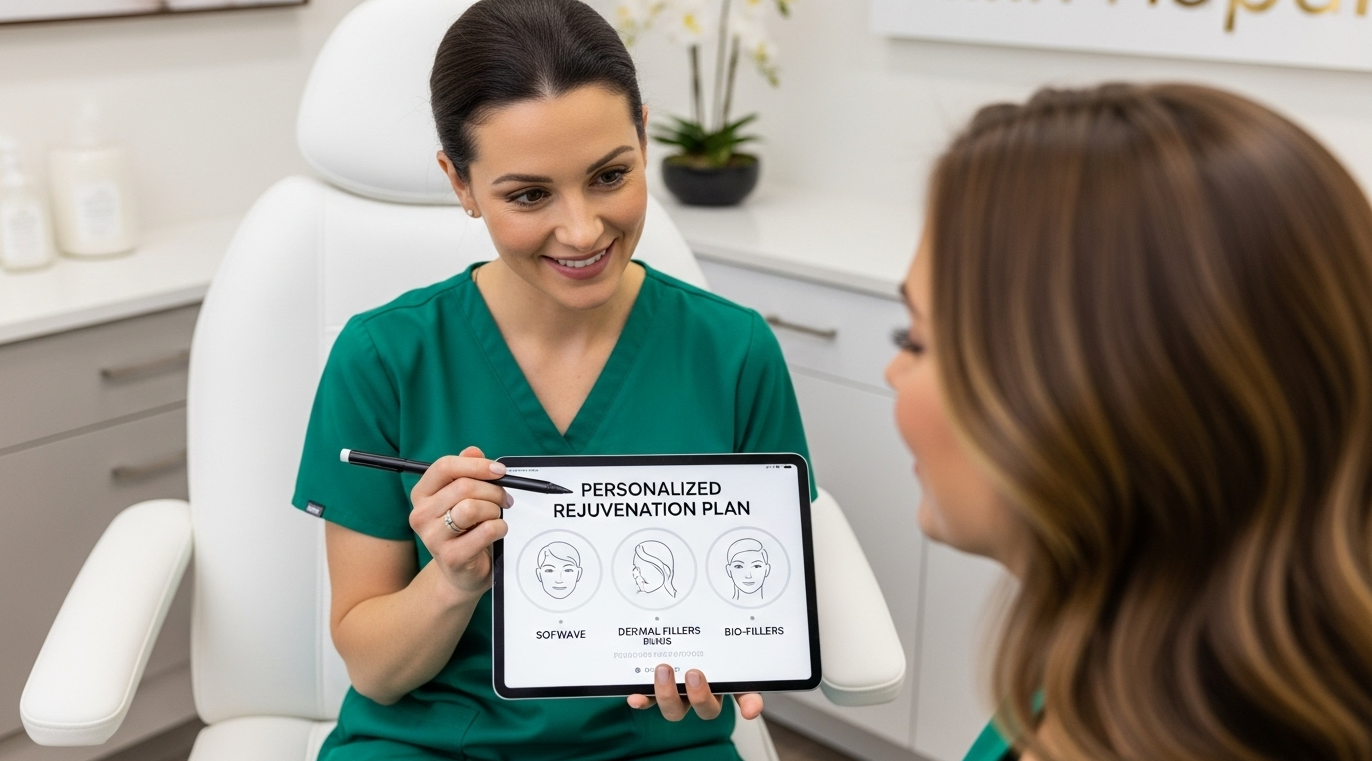
Candidacy is decided in person. During your consultation, Mandi Goble, RN, examines your skin while you sit upright, since gravity shows laxity more honestly than a reclined treatment chair. She assesses skin thickness and texture along with the position of your brows and jawline, and she reviews past treatments and your medical history. She also asks what you hope to see in the mirror six months from now, which often tells her as much as the exam does.
Mandi has worked as a registered nurse since 2004 and has performed cosmetic injections since 2012, and that injector background shapes how she approaches skin tightening. She evaluates the face as a set of connected layers, so a Sofwave recommendation comes with a clear sense of whether loose skin or lost volume is driving the change you have noticed. For patients planning the cost of treatment, flexible payment plans are available.
Frequently asked questions about who Sofwave is best for
What is the best age to start Sofwave?
Sofwave is FDA-cleared for adults aged 22 and older, and many patients start in their late 30s or 40s when the first signs of laxity appear. Skin quality and the degree of laxity predict results better than age alone.
Can Sofwave replace a facelift?
Sofwave can serve as an alternative for patients with mild to moderate laxity who want firmer skin without surgery. For heavy jowls or strong neck banding, a surgical facelift or neck lift produces a change that Sofwave cannot match.
How many Sofwave sessions will I need?
Many patients reach their goal with a single session. Those with more pronounced laxity may benefit from a second session four to six weeks later, followed by a maintenance session about once a year.
Is Sofwave a good option for darker skin tones?
Sofwave is well suited to medium and deeper skin tones because its ultrasound energy does not target pigment. This lowers the risk of pigment changes that can follow some laser-based tightening treatments.
How long do Sofwave results last?
Results commonly last a year or longer, depending on your age and how actively your skin produces collagen. Annual maintenance helps hold and build on the improvement.
Is Sofwave worth it in your 60s?
Sofwave can be very worthwhile in your 60s when your skin quality is good and your laxity is moderate. If heavy jowls or loose neck skin are the main concern, your provider will talk with you about whether surgery would serve you better.
Choosing Sofwave for the right reasons
Sofwave delivers its best results for people whose skin has started to loosen but has not yet folded, and whose goal is to look firmer and more rested. For that group, it offers real improvement with no incisions and no time away from work or family. For patients whose aging involves deeper descent or surplus skin, surgery remains the more effective path, and knowing that before you book saves both time and disappointment.
At Face Fabulous Med Spa in Clarksville, Tennessee, every Sofwave plan begins with a candid assessment of your skin and a conservative approach that favors natural-looking results. If you want to know where your own skin falls on that spectrum, schedule a consultation and let our team give you a clear, honest answer.
References
- Sofwave Medical. Sofwave announces FDA clearance of new lifting indications for eyebrow, sub-mental (beneath the chin) and neck facial areas. 2021. Available at: https://sofwave.com/news/eyebrow-sub-mental-neck-lifting-fda-clearance/
- Gold MH, Biron J. Efficacy and safety of high-intensity, high-frequency, non-focused ultrasound parallel beams for facial skin laxity. Journal of Cosmetic Dermatology. 2024;23(1):117-123. Available at: https://pubmed.ncbi.nlm.nih.gov/38031530/
- Suh DH, Lee SJ, Song KY, Ahn HJ, Shin MK. High-intensity, parallel ultrasound tightening of facial skin: clinical and pathologic results. Journal of Cosmetic Dermatology. 2025;24(2):e16670. Available at: https://pmc.ncbi.nlm.nih.gov/articles/PMC11845918/